Why Professional Headshots Still Cost Too Much — and Why That's Finally Starting to Change
12 min read
Product
Many AI headshot tools offer a free trial, but the free experience often ends before users have enough confidence to decide. Here's why that creates friction — and why UPIC works differently.

At first glance, the AI headshot market looks easy to try.
A lot of services position themselves with some version of the same promise: upload a photo, generate a few examples, see what AI can do for you. On the surface, that sounds friendly and low-risk. And compared with booking a traditional photographer, it can feel faster, cheaper, and much easier to approach.
But once people actually start using these products, a different pattern often shows up.
The free experience is usually just enough to get someone interested, but not enough to help them decide with confidence. They may get a few sample generations, a couple of style tries, or a limited preview of what the product can do. Then, just as they start asking the question that actually matters — Can I really get a headshot I want to use? — they hit a wall.
At that point, they are asked to buy credits, purchase a bundle, or commit to a package before they have had enough room to explore.
That is the real friction in this category.
The issue is not simply price. It is not even just whether a product offers a free trial. The bigger problem is that many AI headshot tools ask for commitment before the user has enough confidence to make a smart choice.
This is the part that often gets lost in AI product pricing.
There is a big difference between letting someone sample a product and letting them evaluate it properly. In a category like headshots, that difference matters a lot, because the thing people are judging is highly personal.
A headshot is not just a generated image. It is something tied to your face, your name, your work, and often your professional credibility. The question is not whether the AI can produce something. The question is whether it can produce something that actually feels like you, looks believable, and fits the context where you plan to use it.
That usually takes more than one or two tries to figure out.
Someone may want to compare a more formal look with a more relaxed one. They may want to see how different backgrounds feel. They may want to test whether the results feel too stylized, too generic, or not quite accurate enough. They may need to try enough variations to discover what actually works for their face and their goals.
That process is not endless, but it is more than a teaser.
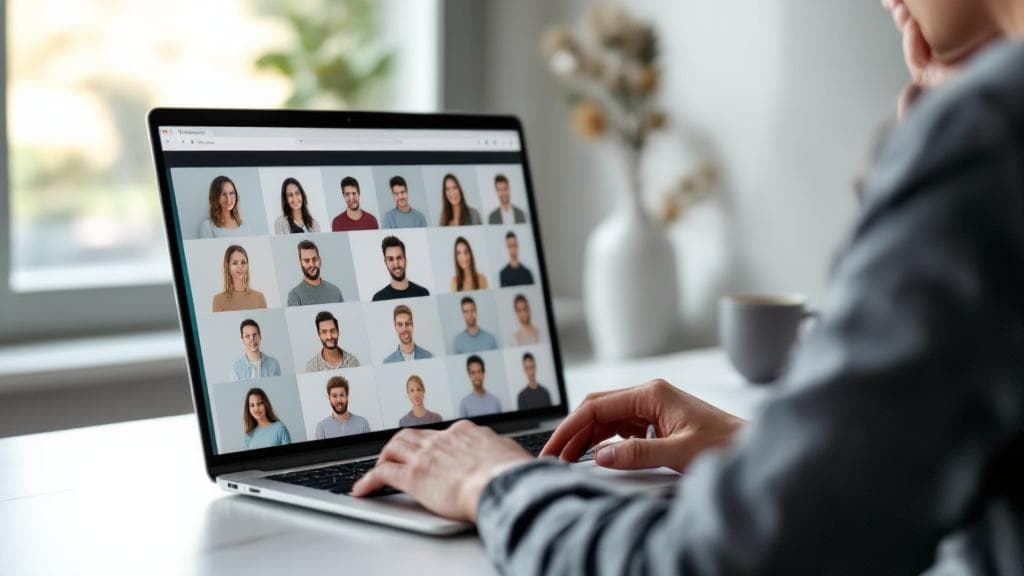
So when a product offers a small number of free generations and then immediately pushes the user toward buying more credits or a package, the customer can end up stuck in an awkward position. They have seen just enough to stay curious, but not enough to feel certain. They are no longer evaluating the result itself. They are deciding whether to pay for the chance to keep evaluating.
That is a very different kind of buying experience.
Most people do not come to AI headshots wanting a long-term relationship with a platform. They are trying to solve a pretty specific problem.
They want a better LinkedIn photo. They need something polished for a company profile. They want a stronger image for a speaker bio, a website, or a portfolio. Sometimes they only need one or two strong photos. Sometimes they want a few versions for different contexts. But in most cases, the need is practical, occasional, and fairly narrow.
That is why early paywalls feel so disproportionate.
If someone only needs a small number of final images, they do not want to buy a large amount of "possibility" before they know whether the product will really deliver for them. They want enough room to explore first. They want to compare, notice patterns, and make a real choice based on what they see.
When that process gets interrupted too early, the product starts to feel less like a creative tool and more like a funnel. The user is no longer being helped toward the right image. They are being pushed toward a payment decision before their actual uncertainty has been resolved.
That creates hesitation, even when the price itself is not outrageous.
The friction comes from timing.
| Most AI headshot tools | UPIC | |
|---|---|---|
| Payment model | Pay upfront for a bundle | Pay only for what you download |
| Preview before paying | Usually limited or no | Yes, with watermarked previews |
| Typical purchase | Dozens of images at once | One or a few images |
| Waste risk | Higher if you only use 1–3 | Lower |
| Best for | People comfortable buying a package upfront | People who want to explore first and buy selectively |
| Experience | Commit first, evaluate after | Evaluate first, commit after |
Most AI headshot tools
UPIC
This is the more accurate way to describe what is happening across the category.
Some products ask for commitment through bundles. Some do it through credit systems. Some offer a small free trial, then push users toward payment once they want to keep exploring. The mechanisms vary, but the pattern is similar: the user is asked to commit before they have enough confidence.
That is the part that feels off.
Because in a product like this, confidence is the whole game. People are not buying image generation in the abstract. They are buying the possibility of a professional photo they genuinely want to use. Until they can see whether that possibility is real for them, price alone is not the main obstacle. Uncertainty is.
A generous-looking package does not fix that if the customer still has not had enough room to discover what works. Neither does a "free trial" that ends right when the product becomes interesting.
This is why so many AI headshot experiences feel almost right but not fully comfortable. The technology may be impressive. The results may be promising. But the buying model still introduces commitment before trust has fully formed.
Most users do not need unlimited images.
They do not need a giant bundle. They do not need a pile of credits. And they usually do not need to be convinced to keep generating for the sake of generation itself.
What they want is much simpler: enough room to explore until they know whether the product can give them something worth keeping.
That means enough previewing to compare styles. Enough flexibility to notice what feels natural. Enough freedom to try again without feeling like every click is pushing them closer to a checkout wall. And once they find something that works, they want a clean way to keep it without having to buy more than they need.
This is what makes headshots different from a lot of other AI categories.
The value is not in sheer output volume. It is in fit.

One believable, professional, context-appropriate image is more valuable than fifty files a person will never use. Three strong options for different professional contexts are more useful than a large folder of near misses. The customer is not trying to maximize quantity. They are trying to find the image that feels right.
That is why the buying model matters so much.
UPIC Studio was built around the idea that people should be able to explore enough to make a real decision before they are asked to pay.
That is the difference.
Instead of using a limited trial mainly to create curiosity and then pushing the user into credits or a large package, UPIC is designed around previews and selective purchase. You can try styles, compare options, and see what actually works before deciding what is worth keeping. When you find an image you want, you pay to download it. If you want a second or third one for other contexts, you can do that too. If nothing feels right, you stop there.
That structure changes the emotional tone of the whole experience.
It lowers the pressure at the beginning. It gives people more room to make a considered choice. And it connects payment to value at the moment the value becomes real, not earlier.
That is especially important in a category where people are often evaluating realism, likeness, tone, and professional fit all at once. Those are not things most users can decide from one or two trial generations.
It is worth saying clearly what UPIC is optimizing for.
The goal is not to win some abstract contest around maximum output per dollar. Plenty of tools can make a bundle look attractive if the comparison is just about volume. But most customers are not shopping for volume. They are shopping for confidence and fit.
The more useful question is not, "How many generated images do I get?" It is, "Do I have enough room to find the one I actually want before I am asked to pay more?"
That is where UPIC is different.
The value is not simply that the product is affordable. It is that it respects the actual decision-making process. It assumes users need more than a teaser, but less than a giant commitment. It gives them space to explore until they can tell whether the result is truly worth keeping.
For a product tied so closely to identity and self-presentation, that is a much better fit than pushing payment right when curiosity turns into serious evaluation.
Pricing always says something about how a product expects to be used.
A limited free trial followed by credits or package pressure says: we will let you peek, but not really choose, until you pay.
UPIC says: explore enough to decide, then pay only for what you want to keep.
That difference matters because headshots are personal. People are not casually collecting outputs. They are trying to decide how they want to present themselves. The model should support that process, not rush it.
A better AI headshot experience is not just about faster generation or lower cost than a studio shoot. It is also about giving users a fair chance to see whether the product can actually meet their needs before asking them to commit.
That is what "try before you buy" should mean in this category.
Not a teaser. Not a nearly-there free sample. Real room to explore.
As AI headshots become more common, the strongest products will not just be the ones that generate impressive images. They will be the ones that make the buying experience feel proportionate to the uncertainty users naturally have.
Because that uncertainty is reasonable.
People want to know whether the result looks like them. Whether it feels believable. Whether it fits LinkedIn, a personal site, a speaker profile, or a company page. Those are thoughtful questions, and they deserve more than two free clicks before a checkout prompt appears.
That is why UPIC works differently.
Not because people should never pay. But because they should have enough room to choose with confidence before they do.
Preview unlimited styles for free. Download the ones you love for $1 each.
Try UPIC Studio →