
Why "Try for Free" Often Isn't Really Enough for AI Headshots
14 min read
Industry Insights
Professional headshots can still cost a couple hundred dollars or more, even for a simple session. Here's why that pricing exists, why it no longer fits how people actually use professional photos, and what's changing.
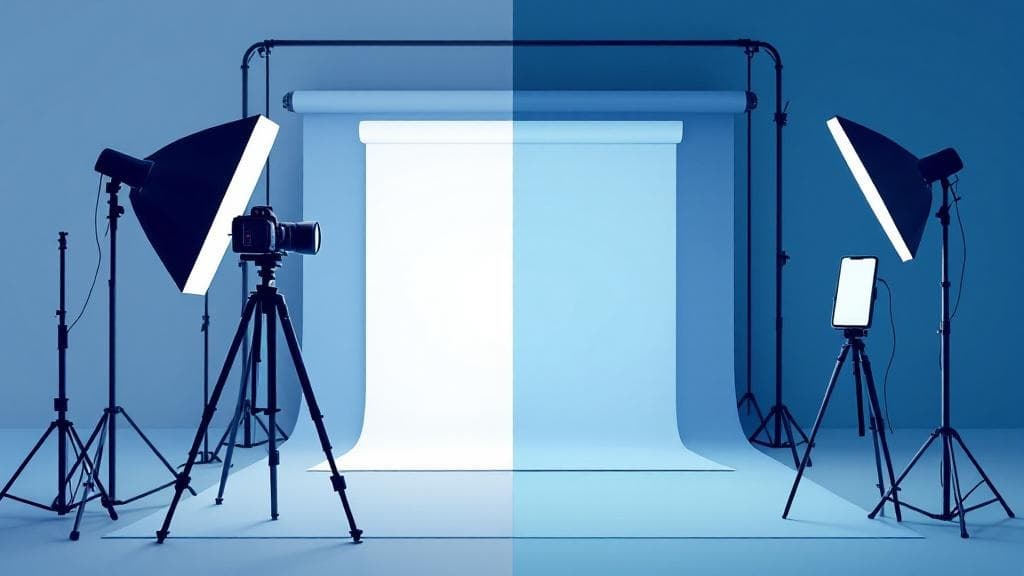
There is a familiar moment that happens when people start looking for a professional headshot.
Maybe you are updating LinkedIn. Maybe you are job hunting. Maybe your company needs a photo for the team page, or you have a conference bio due and suddenly realize the only recent picture of yourself was cropped from a wedding or taken on your phone in bad lighting.
So you start looking around for a photographer, and pretty quickly you realize that even a straightforward headshot session can cost a couple hundred dollars. In bigger cities, or with more established photographers, the price can climb from there.
Even if you understand that photography is skilled work, the reaction is still common: that much for a few photos?
That question usually gets framed the wrong way. It is not really about whether photographers are overcharging. In most cases, they are not. Good photographers are doing real work. You are paying for time, equipment, lighting, retouching, direction, and experience. The real issue is that the traditional headshot model was built for a world where people needed professional photos far less often than they do now.
For a long time, that model made sense. A headshot was something you got occasionally, not something you thought about every year. It lived on a company directory, a business card, maybe a conference program. You booked a photographer, paid for the session, chose your favorite image, and moved on. If you repeated that process every five or ten years, the cost felt manageable.
But professional life does not work like that anymore.

Today, the same person may need a photo across different platforms and audiences — LinkedIn, a company profile, a speaker bio, a personal website, a freelance platform, a podcast appearance, or a press mention. And often, one photo does not really do the job. The image that looks right on LinkedIn may feel too stiff on a portfolio site. The one that feels warm and personal on a founder page may not feel formal enough for a conference program.
What changed is not the value of a good headshot. It is the frequency, flexibility, and context around how people use them. The old model assumed scarcity. Most people now live in a world of constant digital presentation.
That is where the tension comes from.
It helps to say this clearly: professional headshots are not expensive for no reason.
Even a relatively simple session involves more work than most people see. There is time spent coordinating before the shoot, setting up lights or choosing a location, photographing multiple looks, helping the client pose naturally, reviewing images, narrowing down selects, and retouching the final files. Depending on the photographer and the package, you may also be paying for studio overhead, equipment costs, editing time, and years of experience.
That is why a polished headshot often lands in that "couple hundred dollars" zone, and why premium sessions can go much higher. You are not only paying for thirty minutes in front of a camera. You are paying for the whole system required to produce an image that feels intentional and professional.
And for the right use case, that can still be worth it.
If you are an executive doing a leadership shoot, a team getting photographed together, or someone who wants a more carefully art-directed result, traditional photography still makes a lot of sense. There are plenty of situations where it remains the best option.
The modern problem is not that everyone needs a premium photography experience every time they need a photo. It is that a huge number of people now need professional-looking images more often, in more formats, and with more variation than the traditional model was designed to support.
Most people are not thinking, "I want the absolute highest-end portrait experience available." They are thinking something much more ordinary.
They want to stop using an old photo. They want something that looks more polished than a selfie. They want to look current, credible, and like themselves. They may want one version that feels corporate, another that feels more approachable, and another that works for a website or speaking profile.
That is where the traditional pricing model starts to feel off.
It is not because the photographer's work lacks value. It is because the buyer's need has changed. The average professional is no longer buying a once-in-a-decade portrait. They are managing an ongoing digital identity.
A founder may need a more polished photo for investors, a warmer one for a company story page, and a more casual one for social or community-facing spaces. A job seeker may need to update LinkedIn after years of using an outdated image. A consultant may want something more formal for one audience and more approachable for another. A startup team may need headshots that feel consistent without spending thousands of dollars every time the team changes.
In all of those cases, the demand is real. So is the hesitation. People still want quality, but they often do not want the cost, scheduling, or one-shot pressure of a traditional session every time they need new images.
That is the gap.
Part of the reason this category has not adapted faster is that professional photography does not scale easily.
A photographer can only shoot so many people in a day. Editing still takes time. Good client direction is hard to compress. Studio costs do not disappear just because customers want cheaper sessions. Even photographers who would like to offer lower pricing are often working within a business model that depends on a minimum floor to remain sustainable.
So the market settled into an awkward pattern. People who could justify the cost booked real sessions. Everyone else delayed, reused outdated images, asked a friend for help, or uploaded something that was good enough but not really good.
That is why so many professional profiles still rely on photos that feel slightly off. Not terrible, just compromised. A little old, a little casual, a little too obviously improvised.
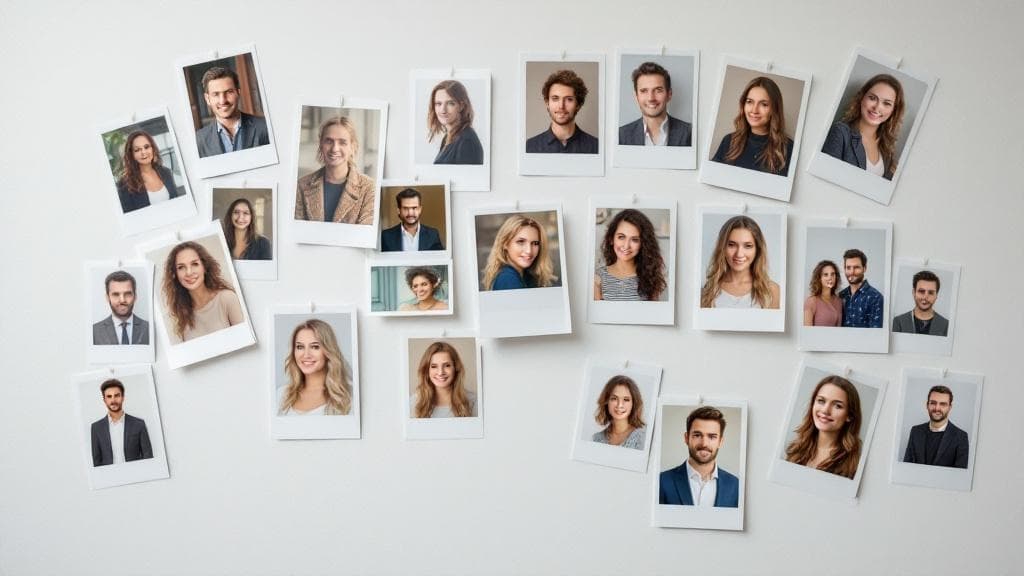
For years, those compromises were treated as normal because there was not much in between a professional shoot and a phone photo.
A lot of the conversation around AI portraits gets flattened into "real photography versus fake photos," which misses what is actually useful here.
The more interesting shift is that people now have access to a new middle layer. Not a replacement for all photography, and not a substitute for every creative or editorial use case, but a practical way to generate polished, professional-looking portraits without the cost and logistics of a full session every time.
That matters because many people are not trying to stage an elaborate photoshoot. They are trying to solve a straightforward problem: I need a better professional image, and I need more flexibility than the old model gives me.
AI-assisted portrait tools make variation possible. Someone can try a more formal version, a more casual version, a different background, or a different tone without booking another shoot. The real breakthrough is not that technology made every photographer obsolete. It is that it made professional presentation more accessible for everyday use cases that used to fall through the cracks.
That is a much more honest claim.
There are still plenty of situations where traditional photography is the better choice.
If you want a fully art-directed portrait, a team shoot, a brand campaign, a specific location setup, or the kind of in-person coaching a great photographer brings to the process, AI is not the same thing. It is not supposed to be.
But that does not mean every professional photo need belongs in that category.
A lot of people do not need a premium portrait experience every time they update their profile. They need something current, flattering, professional, and flexible. They need a few good options. They need speed. They need a lower-stakes way to find an image that actually feels like them.
That is the space where AI-assisted headshots make sense.
The most interesting effect of cheaper professional imagery is not just that people save money. It is that they start making better choices.
When every update costs a few hundred dollars, people default to one safe photo and stretch it across every platform for as long as possible. They tolerate mismatch because the cost of changing it feels too high.
When the barrier drops, people can be more intentional. They can use a more polished image for LinkedIn and a more relaxed one for a personal site. They can update old photos without turning it into a whole project. They can experiment and actually choose the one that fits the context instead of settling for whatever they happen to have.
That shifts the decision from "Can I justify paying for this?" to "How do I actually want to present myself?"

It also opens the door for people who used to opt out completely: job seekers, freelancers, consultants, founders, remote workers, and anyone who simply wants a professional image without making it a major expense.
This is where UPIC Studio fits.
The traditional model assumes a client books first, pays upfront, and receives a limited set of finals at the end. That structure made sense when sessions were rare.
But for people who now need flexibility more than ceremony, the better model is almost the reverse: explore first, compare options, and pay only for what you actually want to keep.
That is why UPIC uses watermarked previews and pay-per-download pricing. You can try different styles, compare versions, and only pay for the images you want. If one works, you download it. If three work for three different contexts, you download those. If nothing feels right, you move on without having committed to a large upfront package.
That model is not trying to beat traditional photography at being traditional photography. It is solving a different problem: the gap between needing something professional and not wanting to turn it into an expensive, scheduled, all-or-nothing event.
In one sense, no. Professional photography costs what it costs because it is real work, and for the right use cases that value is justified.
But in another sense, yes — at least for the way most people now need professional images. The mismatch is not about whether photographers deserve to be paid. It is about whether the old buying model still fits modern digital life.
For a lot of people, it does not.
They do not need one perfect photo every ten years. They need a few strong images, updated more often, for different platforms and audiences. They need flexibility. They need convenience. They need a lower-friction path to looking professional.
That is what is changing now.
The future of headshots is probably not one model replacing another. It is a broader range of options that better reflect how people actually live and work. Traditional photography will still matter. But it will sit alongside faster, more accessible tools that make professional presentation easier for everyday use.
And honestly, that shift has been overdue for a while.
No session fees. No bundles. Preview unlimited styles, pay only for what you download.
Try UPIC Studio →