Why Professional Headshots Still Cost Too Much — and Why That's Finally Starting to Change
12 min read
Professional Branding
The same headshot does not always work everywhere. Here's why professional identity is contextual — and why choosing how you show up matters more than trying to find one universal photo.
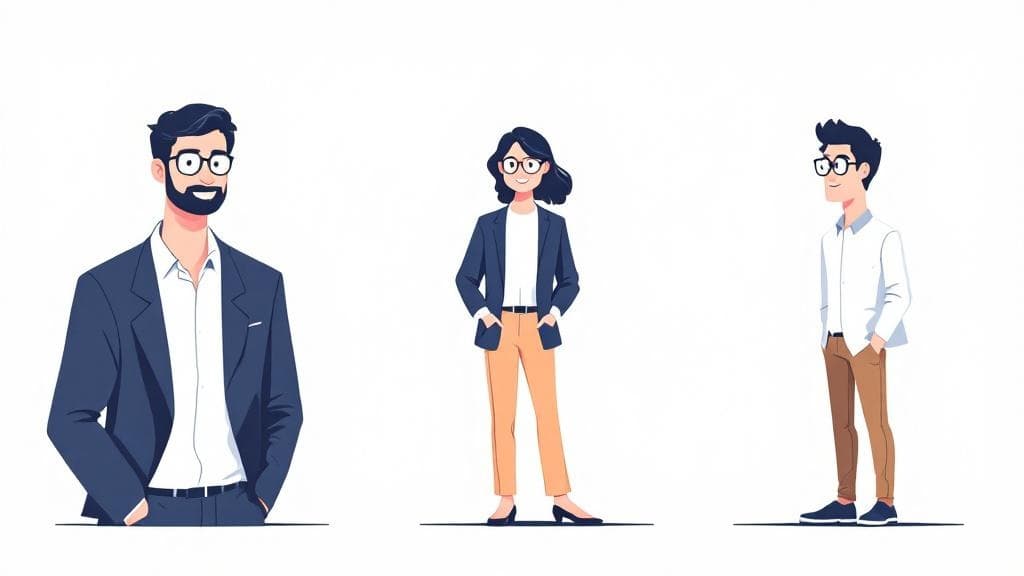
Most people would never wear the exact same thing to every important moment in their professional life.
You would not show up to a board meeting the same way you would show up to a creative workshop. You would not dress for a client pitch exactly the way you would for a coffee chat with a collaborator. Even when you are fully yourself in each setting, you are still making choices about tone, context, and how you want to be read.
And yet a lot of people use the same headshot everywhere.
The same photo ends up on LinkedIn, a company bio, a portfolio, a speaker page, and sometimes even a personal website. It becomes the default image for every professional setting, whether or not it actually fits the room.
That is understandable. For a long time, most people did not really have another option. Professional photography was expensive, infrequent, and usually treated as a one-time investment. You got one good headshot, maybe two, and used it everywhere for years.
But that old constraint shaped the way people think about professional photos more than it should.
The better question is no longer, "What is my one professional headshot?" It is something more useful: How do I want to show up in this particular context?
One reason people get stuck on this topic is that multiple headshots can sound like multiple personas, as if using a more formal image for LinkedIn and a more relaxed one for your personal site means you are presenting fake versions of yourself.
That is usually not what is happening.
In real life, people already adjust how they present themselves depending on where they are and who they are speaking to. Not because they are dishonest, but because context matters. The version of you that feels right in an investor meeting may not be the version that feels right on a creative portfolio. The expression, styling, and tone that communicates authority in one space may read as overly stiff in another. What feels warm and approachable in one setting may feel too casual in a more formal one.
None of that makes the image less true. It just means that professional identity is not flat.
Most people are not one thing at work. They are credible and approachable. Professional and creative. Polished and human. The question is not which one is the "real" version. The question is which dimension should lead in a particular setting.
For years, the one-photo-for-everything approach made practical sense.
A professional headshot was expensive enough that people wanted it to be versatile above all else. The safest strategy was to aim for something neutral: not too formal, not too casual, not too expressive, not too stylized. The goal was to create one image that could stretch across as many contexts as possible without feeling obviously wrong in any of them.
That is how a lot of "professional" headshots ended up looking polished but generic. They were built to fit almost anywhere, which often meant they did not say much anywhere.

There is nothing inherently wrong with a neutral headshot. It can still be useful. But the compromise becomes more obvious once your professional life starts unfolding across more platforms and audiences.
A founder may need to speak differently to investors, customers, and collaborators. A designer may want a more buttoned-up image for LinkedIn and a more personal one for a portfolio. A consultant may want to look polished on one page and warmer on another. A speaker bio may call for something more authoritative than a personal website.
Once your work happens in all of those places, the limits of a single catch-all photo become much easier to feel.
This matters because a photo often does a lot of work before someone reads a word about you.
It shapes first impressions, sets expectations, and gives people a quick sense of who you are and how you might show up. That does not mean every image needs to be heavily optimized, but it does mean photos are never neutral. They always signal something.
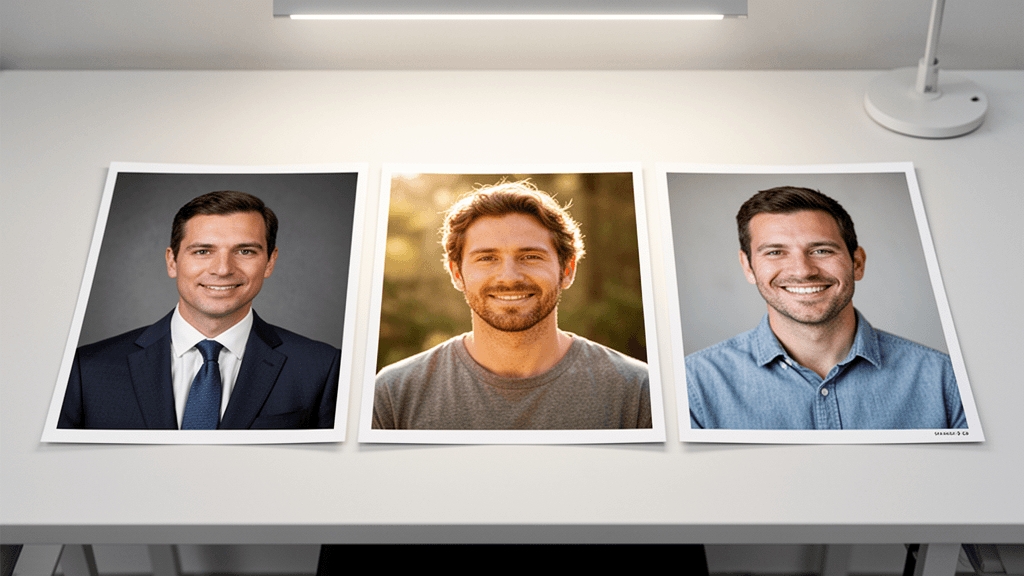
A more formal headshot might communicate credibility, structure, and authority. A softer, more relaxed image might communicate warmth and openness. A more creative portrait might suggest personality, taste, or confidence in your own point of view. These are not rigid formulas, but they are real signals, and people respond to them quickly.
That is why context matters.
The image that feels perfect on LinkedIn may feel slightly too stiff on a personal site. The one that works beautifully on a founder page may not feel quite right on a conference speaker bio. A portfolio photo that shows personality and creative energy may not be the strongest choice for a corporate team directory.
When people say they want a headshot that "works everywhere," what they often mean is that they want to avoid making the wrong choice. But trying to make one image work everywhere can flatten the parts of you that would actually be most useful in each setting.
This is the bigger shift.
For a long time, professional presentation was treated as something singular. You had your "professional self," and the goal was to make that image as broadly acceptable as possible. But the way people work now is much more layered than that.
Someone can be a founder, advisor, operator, and public-facing storyteller all at once. A freelancer may work across corporate clients, creative clients, and community spaces. A person's LinkedIn profile, website, portfolio, and speaker bio are not interchangeable surfaces anymore. They each serve a different purpose, and they often reach different audiences with different expectations.
So it makes sense that the image attached to those spaces might also vary.
That does not mean you need a wildly different portrait for every corner of the internet. It just means that choosing how you show up can be strategic instead of default. You can think about where an image will live, what you want it to communicate, and whether it matches the kind of relationship that space is meant to create.
A corporate headshot may need more polish and authority. A personal website may benefit from something more relaxed and human. A creative portfolio may want a little more individuality. A service business profile may benefit from warmth and trust more than formality.
The same person can show up well in all of those ways.
One reason this conversation matters more now is that people finally have more room to act on it.
When professional photography is expensive, most people default to one image and try to make it do everything. Even if they suspect another photo might work better in a specific context, the cost of creating a whole new set often feels hard to justify. So they settle for a general-purpose option and move on.
That changes when trying multiple looks becomes easier and cheaper.
Once the barrier drops, people can stop treating their headshot like a permanent identity statement and start treating it as part of how they communicate in different spaces. They can experiment with a more formal version, a more creative version, a warmer version, or a cleaner corporate version without turning every update into a full production.
That does not just save money. It gives people more agency.

Instead of asking, "What is the one photo I can afford to use everywhere?" they can ask, "What actually fits this context best?"
That is a much better question.
People sometimes resist this idea because it can sound too calculated. They hear "different headshots for different contexts" and assume it means over-managing your image or constructing artificial selves for different audiences.
But there is a difference between being performative and being intentional.
Being performative means trying to become someone you are not. Being intentional means choosing which part of your real self should lead in a particular context. Most people already do that in conversation, in writing, in how they dress, and in how they introduce themselves. A headshot is not separate from that. It is just another form of presentation.
If anything, using the same image everywhere can sometimes be less authentic, because it assumes that every professional setting should flatten you into a single tone.
The more honest approach is often to acknowledge that identity has dimension. You may be serious and warm. Creative and credible. Refined and relaxed. The point is not to invent those qualities. It is to let the right one come forward for the situation.
This is one of the reasons UPIC matters beyond price.
The obvious advantages of AI headshots are convenience, speed, and lower cost. Those things matter. But the more interesting advantage is flexibility.
If you can explore different styles, compare tones, and choose the images that actually fit different parts of your professional life, then the product becomes about more than replacing a studio session. It becomes a way to be more intentional about how you present yourself.
That is why the idea behind UPIC Studio is not simply "generate a headshot." It is closer to this: try different ways of showing up, then keep the ones that feel right.
A more polished image for LinkedIn. A more relaxed one for your website. A more expressive one for a portfolio. A more formal one for a speaker bio. You do not need to commit to one generic photo and hope it works everywhere.
You can choose.
Maybe the goal is not to find one perfect headshot that works in every situation.
Maybe the goal is to have the right photo for the room you are walking into.
That is a more modern way to think about professional identity, because modern work is more contextual than it used to be. People move across audiences, platforms, roles, and expectations constantly. Their self-presentation does too.
Different rooms ask for different things. Different audiences notice different signals. Different platforms create different expectations.
You are still the same person in all of them.
But you get to choose how you show up.
Corporate for LinkedIn. Creative for your portfolio. Casual for your website. $1 each.
Try UPIC Studio →